
- Data centers are currently contributing to lower electric bills, with research indicating that for every doubling of data center capacity, average retail electricity prices decrease by 3.5%.
- However, sinking AI demand could reverse this trend, as a lack of expected demand may lead to increased fixed costs being spread among fewer customers, potentially raising prices.
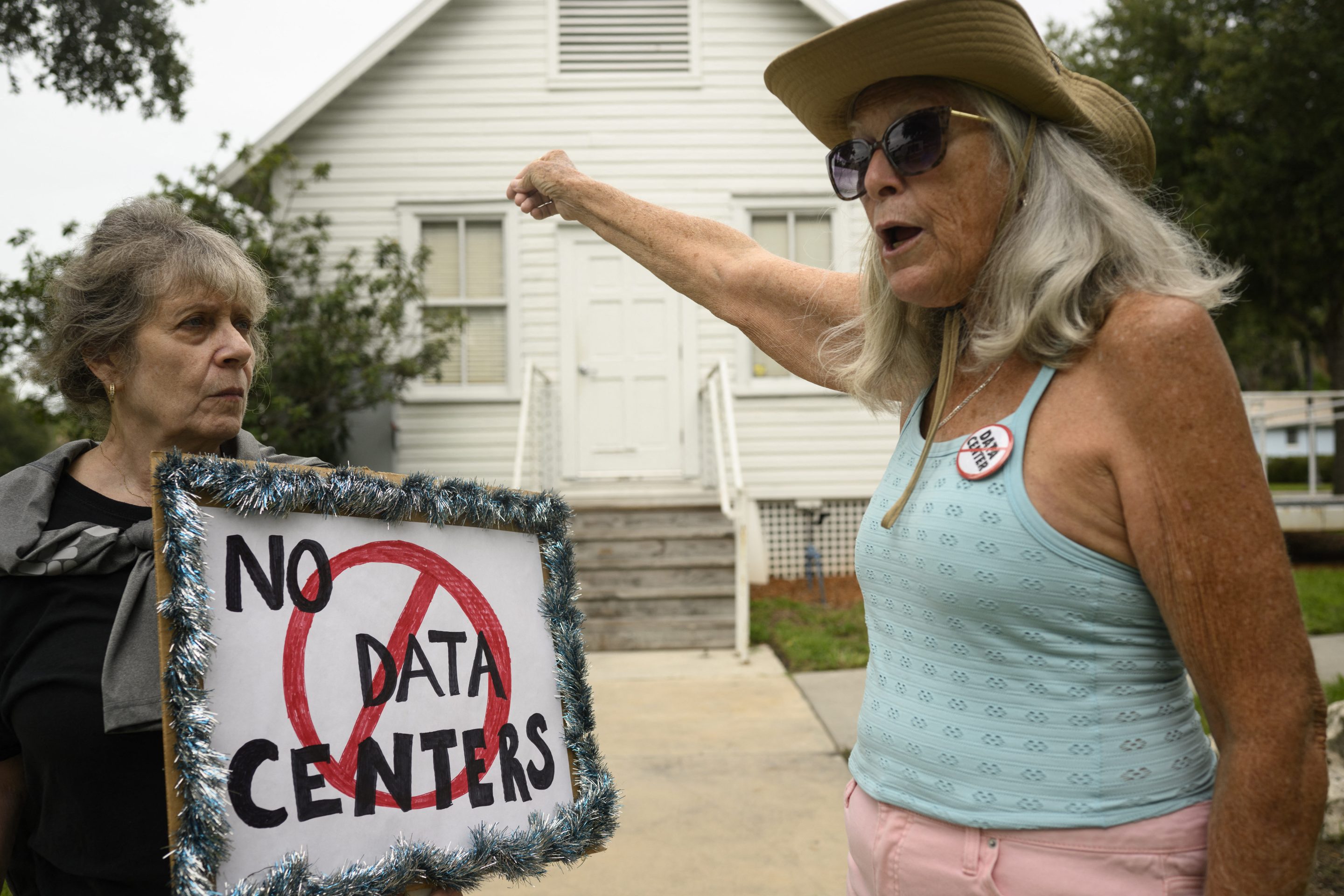
- Public sentiment towards data centers is largely negative, with only 27% of Americans favoring new construction, as they are often blamed for failed public policies.
- Concerns about data centers include noise, light pollution, and potential negative impacts on property values, but these issues are often tied to government zoning decisions.
- Georgia has reportedly lost $1.5 billion in revenue due to policies favoring data centers, raising concerns about the long-term economic impact of such public policies.
Data centers have become a focal point in the debate over electricity costs. While a study from the Electric Power Research Institute indicates that data center operations have historically led to a decrease in retail electricity prices, concerns are mounting about the sustainability of this trend.1
For every doubling of data center capacity, average retail electricity prices decreased by 3.5%, with a statewide decrease of about 6%. This is attributed to fixed costs being spread over a larger consumer base, which has historically benefited residential customers.
However, the landscape is shifting. Data center construction is expected to triple by 2030, raising alarms about potential future price increases. In Virginia, where data centers are most concentrated, residential electricity prices have surged by more than 13% in the last year. If demand for these centers declines, the fixed costs could be distributed among fewer consumers, leading to higher prices.
Mark Cuban has warned that many data centers may become obsolete as AI technology becomes more efficient, suggesting that the anticipated demand may not materialize. “A lot of data centers…are going to be turned into pickleball courts,” he stated, highlighting the uncertainty surrounding future energy needs.
As electrification continues with the rise of electric vehicles and heat pumps, there is potential for household energy costs to decrease independently of data center growth. This could lead to a complex interplay between data center demand and electricity pricing in the coming years.
“For every doubling of data center capacity, average retail electricity prices fell 3.5% between 2015 and 2024, per EPRI. But if demand softens, fixed costs spread across fewer users could push prices higher, echoing Mark Cuban's warning about data centers becoming 'pickleball courts'.”
 The Macon Melody



