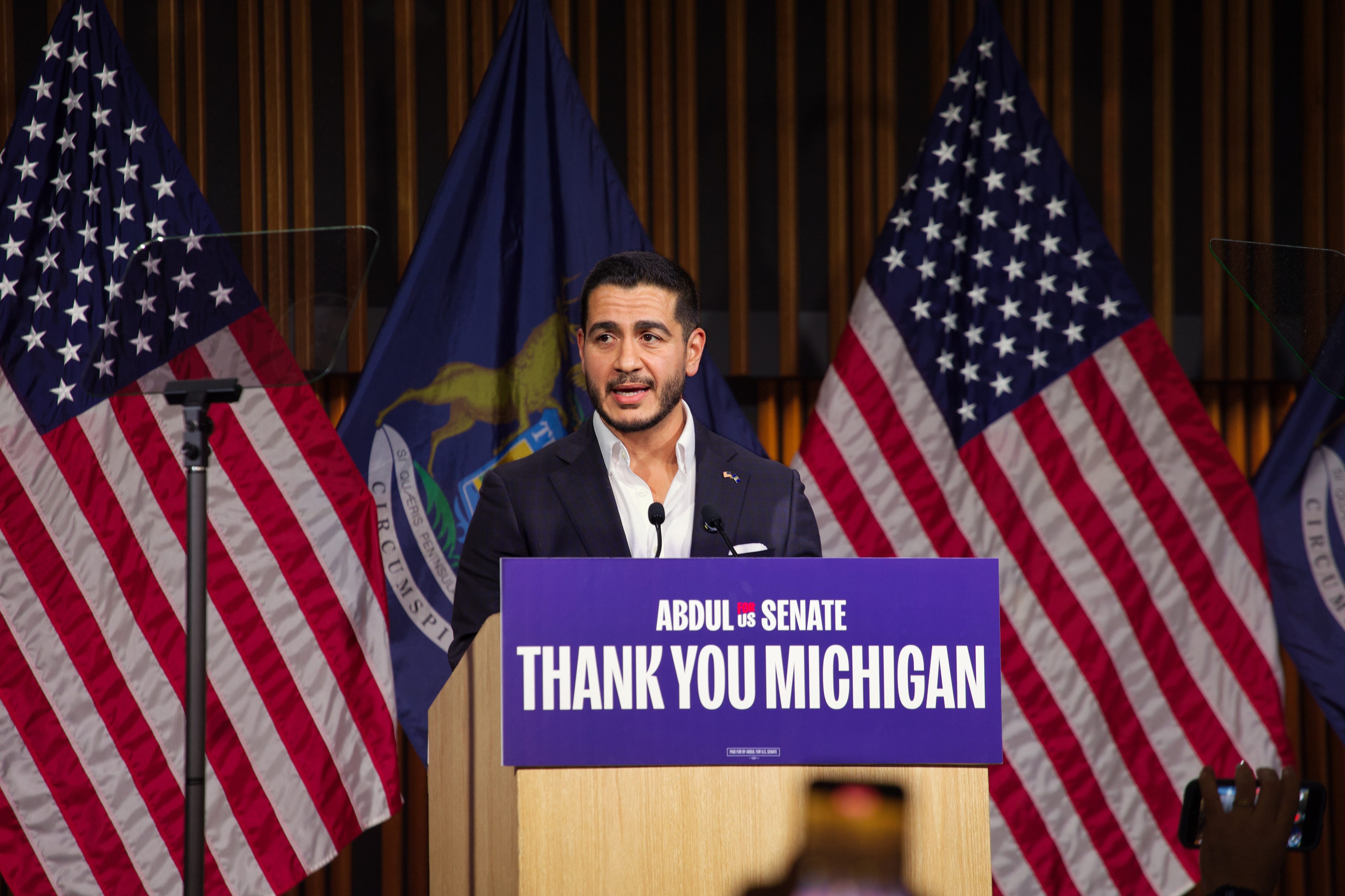
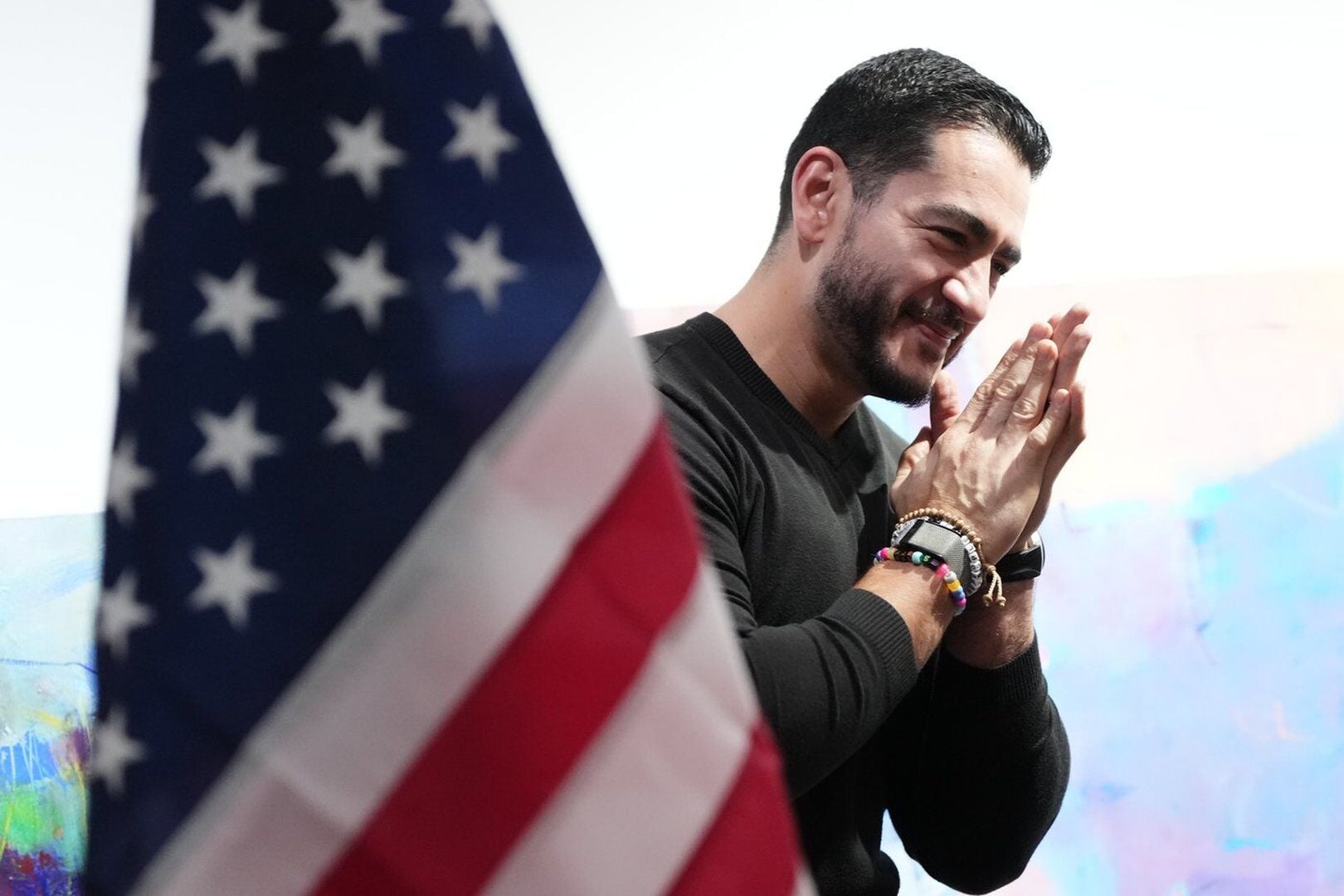
- Abdul El-Sayed won the Michigan Senate race by roughly 340,000 votes, achieving a 7-point swing state victory despite facing nonstop intra-party attacks.
- NBC exit polls indicate El-Sayed received 95% support from Democrats, which was two points higher than the 93% support Republican Mike Rogers received from Republican voters.
- In his victory speech, El-Sayed addressed the President, stating, 'Donald, look, I know you've struggled with my name' and added that after being sworn in, he could call him 'senator.'
- El-Sayed's use of Arabic terms like 'habibi' and 'inshallah' has sparked celebration among Arabs from Michigan to the Middle East.
- During the campaign, the U.S. President referred to El-Sayed as a 'jihadist', evoked the Sept. 11 attacks, and deliberately misstated his name.
- El-Sayed's victory has buoyed progressives who argue against conventional electability wisdom, as he is a strong critic of Israel.
- The narrative that El-Sayed was 'struggling with Black voters' proved totally bogus: he matched Harris's 2024 Black support and performed 11 points better with Black voters than with Arab/Middle Eastern voters.
- National polling indicates that El-Sayed's stance on Israel helped him, as many voters believe the US gives too much military aid to Israel.

Abdul El-Sayed's recent victory in the Michigan Senate race has resonated deeply within Arab communities, both locally and abroad. His incorporation of Arabic phrases like 'habibi' and 'inshallah' into his victory speech has sparked celebrations, highlighting a cultural connection that transcends borders.15
El-Sayed, the son of Egyptian immigrants, won by approximately 340,000 votes, despite facing significant opposition from within his party. His campaign was marked by attacks from influential Democrats, including House Speaker Emerita Nancy Pelosi and Jim Clyburn, as well as criticism from major media outlets like The Atlantic and The New York Times.
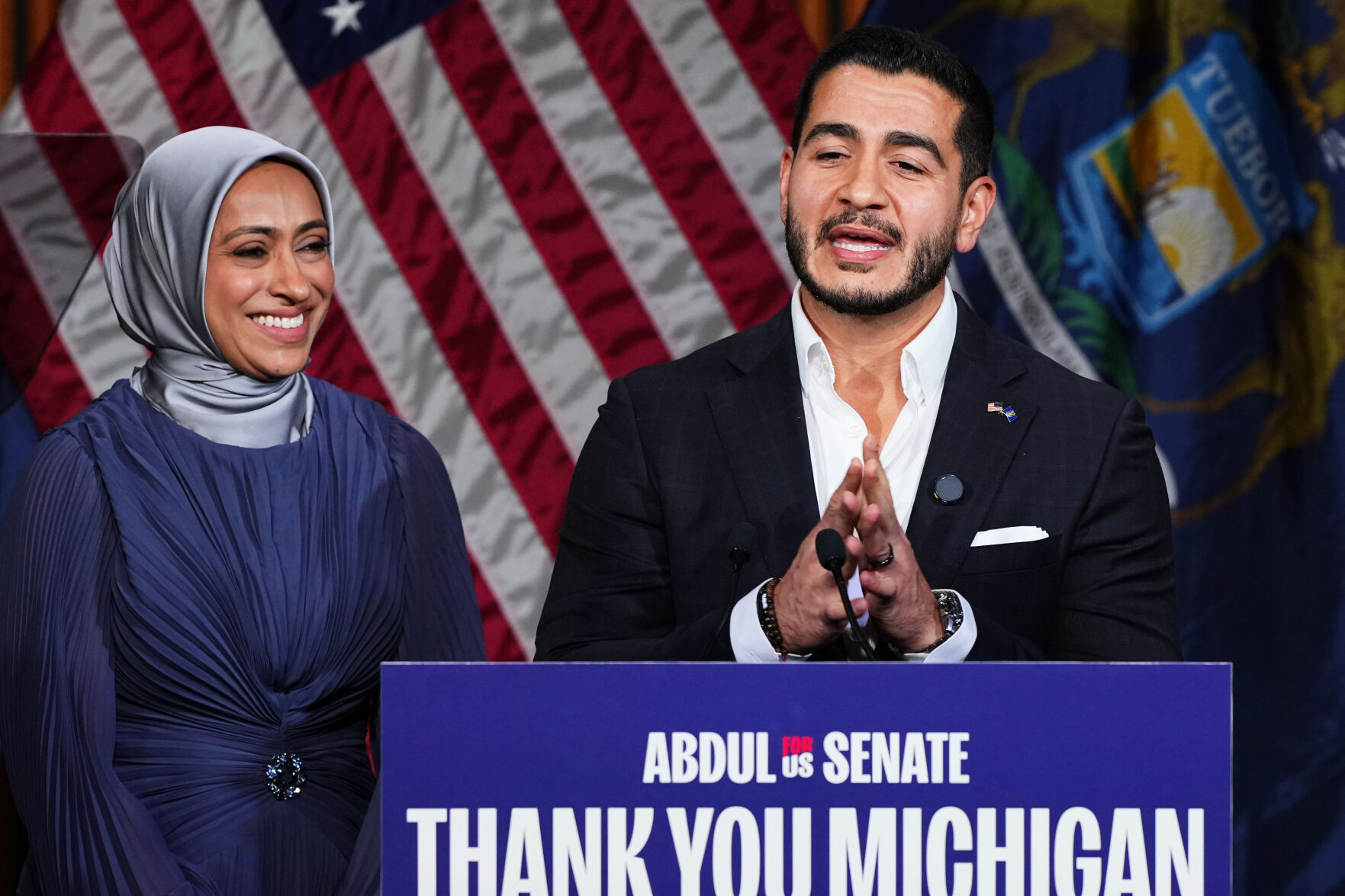
Despite these challenges, El-Sayed received 95% support from Democrats, surpassing the 93% support garnered by his Republican opponent, Mike Rogers. This statistic contradicts narratives suggesting he was dividing the Democratic base, which were largely propagated by pro-Israel groups aiming to undermine his electability.2

El-Sayed's stance on Israel also played a crucial role in his campaign, with polls indicating that 44% of independents believe the US relationship with Israel is more harmful than beneficial. Even traditionally pro-Israel outlets acknowledged that his position resonated with voters, suggesting that it may have contributed positively to his electoral success.
As El-Sayed prepares to take office, he has already begun to challenge the narratives surrounding his candidacy, stating, “There is this delicious irony in the fact that you’re constitutionally obligated to swear me in in January.”
“El-Sayed's victory by roughly 340,000 votes came amid attacks from liberal elites and his Republican-funded opponent, yet NBC exit polls show 95% Democratic support. His 11-point better performance with Black voters than Arab/Middle Eastern voters debunks the 'struggling with Black voters' narrative, and an analysis of 72 precincts with highest Jewish voters shows 60% support.”

 The Real News Network