- A rare dinosaur fossil has been discovered in Antarctica after sitting in a drawer for decades.
- The fossil was collected in December 1985 during an expedition to Antarctica's James Ross Island by geologist Mike Thomson.
- Paleontologist Mark Evans identified the fossil decades later, realizing it belonged to a dinosaur.
- The fossil is an 82-million-year-old tail vertebra from a titanosaur, marking the first dinosaur fossil ever recovered from Antarctica.
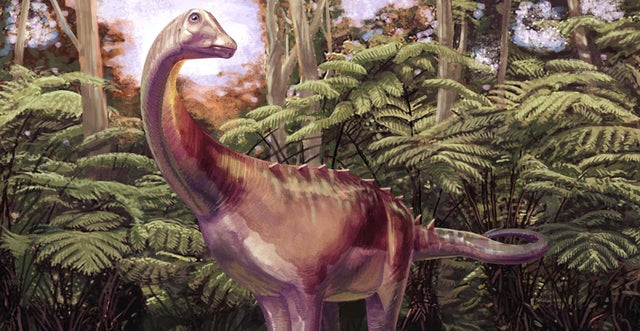
- Titanosaurs were long-necked, plant-eating dinosaurs that inhabited Antarctica when it was covered in lush forests.
- At about 23 feet (7 meters) long, the dinosaur was small for its group and may have been young when it died.
- Thomson initially thought the vertebra came from an ancient marine creature, like other fossils found by the team.
- The discovery is significant as it helps explain a fragmentary fossil record in today’s southern landmasses.
- Since 1985, researchers have found additional dinosaur specimens in Antarctica, identifying fossils from 12 named species.
A rare dinosaur fossil, the first ever found in Antarctica, has been identified after decades in storage. Discovered in 1985 on James Ross Island by geologist Mike Thomson, the 82-million-year-old tail vertebra belonged to a titanosaur, a group of large, long-necked dinosaurs.124
:focal(748x1019:749x1020)/https://tf-cmsv2-smithsonianmag-media.s3.amazonaws.com/filer_public/3c/1f/3c1f6ba0-0486-41be-90f9-b9d192cfd29a/notebook-and-fossil.jpeg)
Paleontologist Mark Evans later recognized the bone in the British Antarctic Survey's collections, speculating it might be a dinosaur. This discovery is significant as it represents only the second sauropod body fossil known from Antarctica, although it was the first dinosaur bone collected from the continent. “This discovery represents only the second sauropod body fossil known from Antarctica,” the study's authors noted.3
Titanosaurs roamed Antarctica around 80 million years ago, when the region was lush and forested. The identified specimen measures about 23 feet (7 meters) long, indicating it was relatively small for its group and possibly young at the time of death. Scientists theorize that the creature's body may have floated away from the coast before sinking to the sea floor, where it became fossilized in marine rock.6
Since 1985, researchers have discovered additional dinosaur specimens in Antarctica, identifying fossils from 12 named species and several unidentified bones. The findings contribute to understanding the fragmentary fossil record of today’s southern landmasses. “If he were still with us, he would be delighted to know what this was,” Evans remarked, reflecting on Thomson's legacy.89
“The fossil, collected in 1985, was identified as a dinosaur bone decades later by paleontologist Mark Evans. This discovery marks a significant addition to the fossil record of Antarctica.”
 AP News
 Smithsonian Magazine
 CBS News



