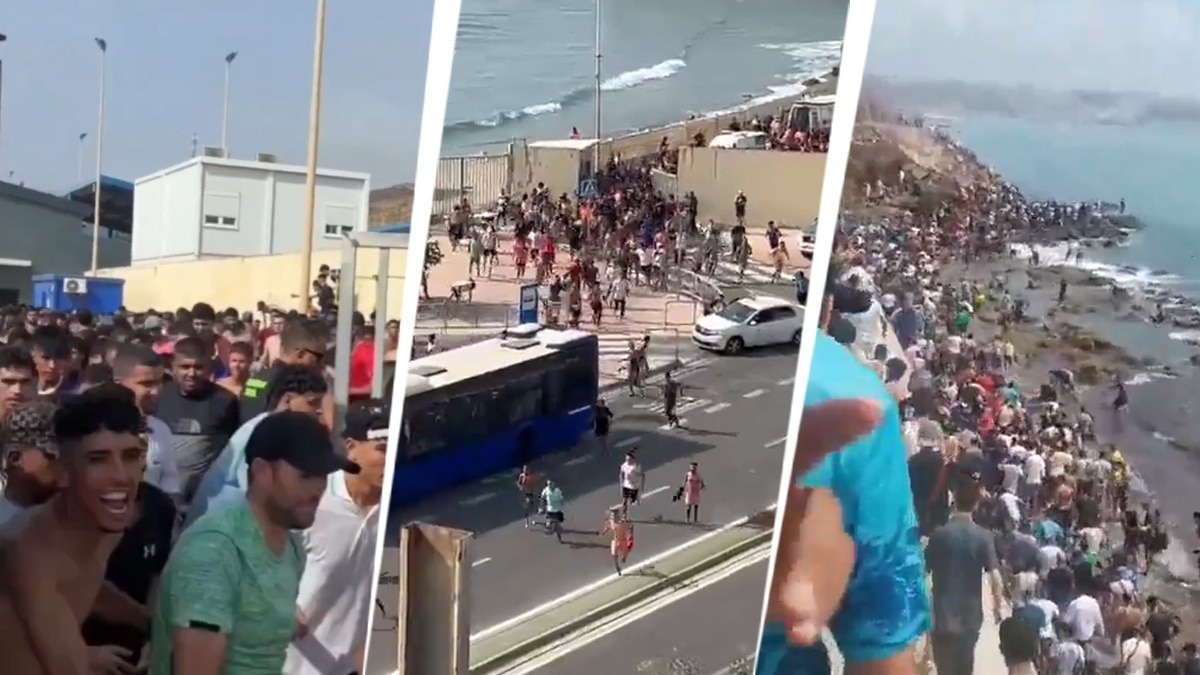
- The Spanish exclave of Ceuta witnessed its largest migrant surge in years, with more than 50,000 migrants arriving since July 30, many by swimming or using inner tubes and improvised flotation devices.
- The influx was the largest arrival of migrants in Ceuta since 2021, prompting the regional president to declare an absolute humanitarian and social emergency and call for troops.
- Spain's Prime Minister Pedro Sánchez rushed to the exclave and slammed the mass crossings as an attack on Spain's sovereignty.
- The crisis became a political flashpoint: Spain's critics abroad and Mr Sanchez's rivals at home used it to attack Madrid, even as Spain claimed the situation was returning to normalcy.
- The trigger for the surge was unclear: Spanish authorities blamed trafficking networks spreading misinformation about asylum, while some said Moroccan authorities allowed the movement.
- Social media was at the centre: posts promising an easy path to Europe raised questions about whether the influx went viral or was organised; migrants showed posts with "Spain is Open", and multiple accounts showed swimmers in wetsuits and flippers.
- The online promises were false: the crowds who reached Ceuta were met with nothing, had no food or shelter, and most quickly turned back as there was no way on to continental Europe.
- Spain's socialist prime minister Pedro Sanchez accused some in the EU of "attacking" Spain; Giorgia Meloni's hard-right Fratelli d'Italia posted images of migrants racing through Ceuta, and Meloni suspended Schengen free movement with Spain, citing a security threat.
- Reactions included Donald Trump, angry at Spain over Iran, calling the surge a "catastrophe" and an "invasion"; Russia gloated over division, and Morocco blamed "criminal organisations".
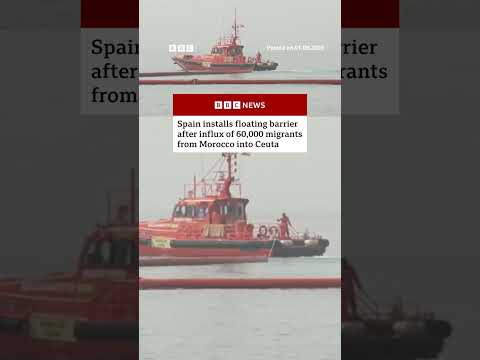
- Sanchez was emphatically not blaming Morocco, calling Rabat a "good ally"; Spain is extending the Ceuta border fence with orange buoys, and EU interior ministers will discuss strengthening external borders next week, with the populist right emboldened.
Ceuta, the Spanish exclave bordering Morocco, experienced its largest migrant surge in years, with over 50,000 migrants arriving since July 30. Many crossed perilously on inner tubes, celebrating their arrival, while at least 67 people tragically lost their lives during the journey.12192021222324
The regional president declared an “absolute humanitarian and social emergency”, urging Madrid to send troops to regain control. Prime Minister Pedro Sánchez condemned the crossings as an attack on Spain’s sovereignty, stating, “This is not a migration crisis, it is a crisis of security”.34
The surge has been attributed to misinformation spread by trafficking networks, suggesting an easy path to asylum in Spain. Sánchez emphasized that the situation is returning to normal, with over 48,300 migrants already sent back to Morocco under existing agreements. However, the political fallout is significant, with Sánchez's critics using the crisis to challenge his government.
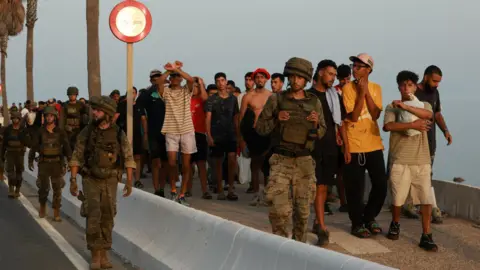
The events have also stirred political tensions in Europe, with Italy's Prime Minister Giorgia Meloni suspending the Schengen agreement with Spain, citing security threats. Meloni's hard-right party has capitalized on the situation, calling for the elimination of policies seen as attracting migrants.161718
As the EU prepares to discuss strengthening external borders, questions remain about the motivations behind the surge, with some speculating whether social media posts promising an easy path to Europe played a role.
“More than 50,000 migrants have arrived since July 30, prompting Ceuta's regional president to declare an 'absolute humanitarian and social emergency' and call for troops. Italy's Giorgia Meloni suspended her country's Schengen agreement with Spain over a security threat, even as Spain claims the situation is returning to normalcy.”



 BBC
BBC