- Grave 75 was uncovered in 2022 at a cemetery near Pień, providing insights into 17th-century burial practices.
- The woman buried in Grave 75 was aged 17-19 and died between 1620 and 1674.
- After her burial, the grave was reopened, and a sickle was placed across her neck with the blade facing her throat, along with a padlock attached to her toe.
- Radiocarbon dating, DNA, isotope, and textile analyses were conducted on the remains, with findings reported in 2026.
- The findings highlighted the anti-vampire burial ritual practices of the time.
- The burial practices of the 17th century were influenced by fears of the dead, with communities often blaming the deceased for misfortunes.
- The location of the cemetery, away from the village and near a crossroads, suggests it may have been a burial ground for those who faced fear or rejection.
- The woman's high status is indicated by the discovery of fine silk threads near her skull, yet her diet showed signs of malnutrition.
Archaeologists in Poland have made a remarkable discovery of a 400-year-old grave in the town of Pień, revealing burial practices steeped in fear and superstition. The grave, known as Grave 75, contained the remains of a young woman, aged 17 to 19, who was interred with a sickle across her neck and a padlock on her toe, both intended to prevent her from returning as a vampire.136
The excavation, which began in 2022, placed her burial between 1620 and 1674, with the highest probability falling within this range. Researchers noted that the sickle's blade was positioned towards her throat, while the padlock served as an additional barrier against supernatural forces. “Both the sickle and the lock are intended to combat supernatural or demonic forces,” said the lead archaeologist.2
The young woman’s burial is particularly intriguing due to her rare maternal lineage, traced back to Scandinavia, which is almost nonexistent in modern Slavic regions. Despite her apparent high social standing, indicated by the discovery of gilded gold and silver threads from a silk cap near her skull, isotope tests revealed periods of malnutrition during her life.
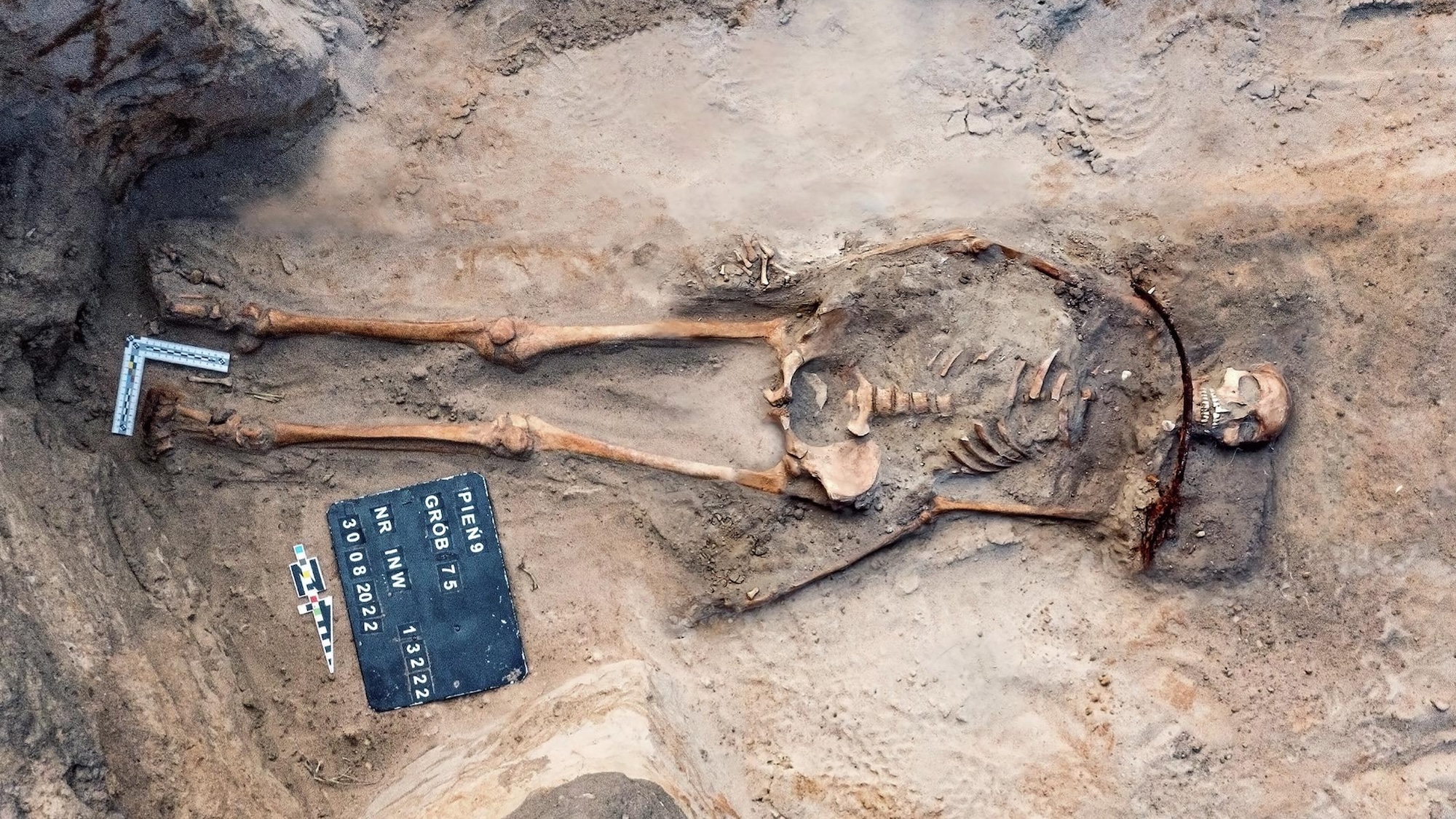
Disrupted soil layers suggest that her body was disturbed before full decomposition, with signs of movement indicating that someone had attempted to rearrange her remains. “This woman may have become a scapegoat for recent calamities,” archaeologists noted, reflecting the historical beliefs of Polish-Lithuanian communities that often blamed the recently deceased for disasters.
The grave's findings provide a rare glimpse into the macabre burial practices of the 17th century, highlighting the lengths to which communities went to protect themselves from perceived threats from the dead.
“The woman, aged 17-19, died between 1620 and 1674, and DNA links her to a rare Scandinavian maternal lineage. Isotope tests from her teeth indicate she grew up near Pień but suffered periods of poor nutrition despite her high social standing.”
 Popular Science