- The Supreme Court expressed grave concern over a National Company Law Tribunal (NCLT) judgment which relied on fake precedents generated using Artificial Intelligence (AI).
- While setting aside an NCLT verdict on Essel Infraprojects insolvency, the top court emphasized that human control over adjudication must remain total and absolute at every stage.
- The court found that the NCLT had relied on non-existent, fake, and hallucinated judgments generated through AI tools.
- There is a global push for AI governance amid warnings of catastrophic harm that could arise from irresponsible AI use.
- AI, if used responsibly, could bring transformational benefits to people across the world, but there are fears that it is creating new dangers.
- Yoshua Bengio stated that AI is approaching or surpassing human capabilities in many domains, outpacing both scientific understanding and governments’ ability to adapt.
- Maria Ressa warned that the first generation of AI was used in social media to spread lies rapidly, creating an information Armageddon.
- Rein Tammsaar highlighted that AI could be used for coercive purposes, eroding trust in governments and undermining democratic structures.
The Supreme Court's recent ruling highlights the dangers of AI in legal contexts, emphasizing the necessity for human oversight.1
The court criticized the National Company Law Tribunal for relying on non-existent precedents generated by AI, stating that human control over adjudication must remain total and absolute.23
Experts like Yoshua Bengio warn that AI's rapid evolution outpaces regulatory frameworks, raising concerns about catastrophic harm from deceptive AI behavior.46
Maria Ressa describes the situation as an ‘information Armageddon’, where misinformation can undermine democracy.7
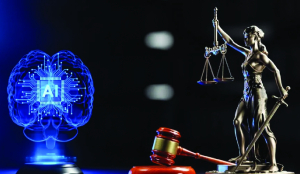
The global dialogue on AI governance is crucial, as developing countries fear being left behind in the AI divide, according to Egriselda López.
The call for a multilateral solution to AI governance is echoed by Ressa, stressing that no single nation can tackle this challenge alone.
As AI continues to evolve, the need for comprehensive governance becomes increasingly urgent, with the potential for both transformational benefits and significant risks looming large.5
“The Supreme Court set aside an NCLT verdict on Essel Infraprojects insolvency after finding the tribunal relied on nonexistent, fake AI-generated precedents. At the UN Global Dialogue, Maria Ressa warned that AI threatens information integrity, calling it an ‘information Armageddon’ and urging a multilateral solution.”
 Daily Pioneer



