- Nagaland University organised a one-day online programme on “Sensitisation & Implementation of NEP 2020 in HEIs” on August 27, focusing on the implementation of the National Education Policy (NEP) 2020 and the integration of Artificial Intelligence (AI) into higher education.
- Prof Bendang Ao highlighted the progress made by Nagaland University in implementing NEP 2020, including initiatives related to the Academic Bank of Credits (ABC), SWAYAM, MOOCs, Indian Knowledge Systems (IKS), and the introduction of AI-related courses and syllabi.
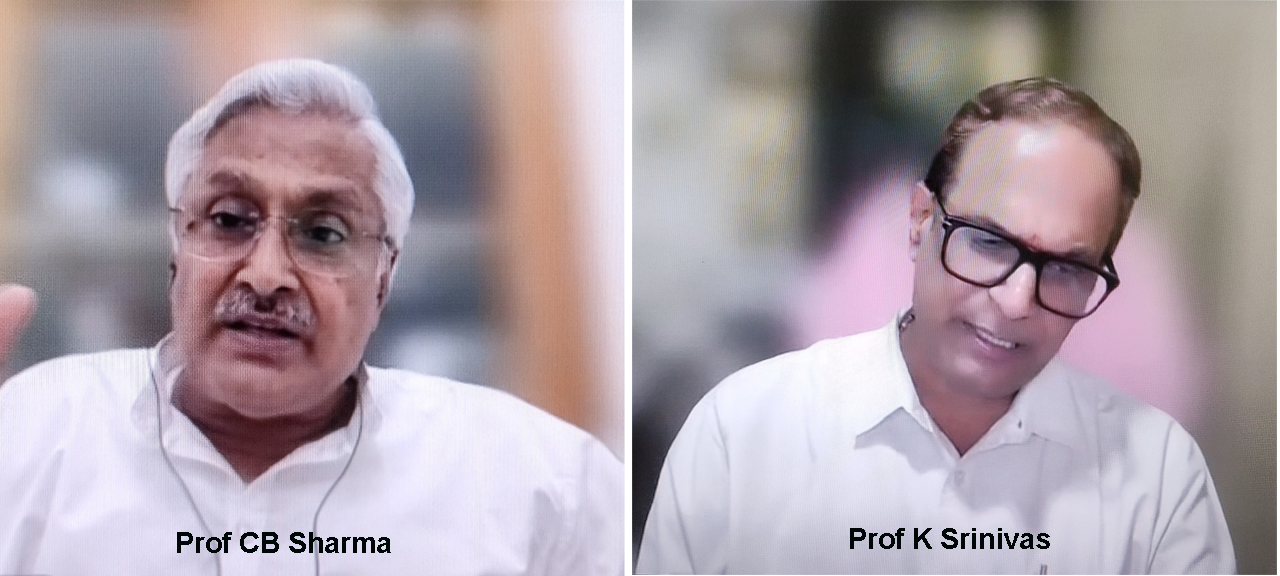
- Prof C B Sharma delivered a lecture on the role of regulatory frameworks in NEP 2020 implementation, stressing the need for stronger links between higher education, the evolving skills and job market, and the needs of society.
- Prof K Srinivas delivered a lecture on integrating AI competencies into learner-centric, experiential, and blended learning environments, highlighting the need for teachers to develop digital, pedagogical, and soft skills.
- The programme concluded with a vote of thanks delivered by Prof Athungo Ovung.
- The programme was organised by the university team for Akhil Bharatiya Shiksha Samagam 2026 under the aegis of the Department of Higher Education, Ministry of Education, Government of India.
- Prof Bendang Ao also discussed the university's MoUs with international institutions and other initiatives undertaken as part of the policy's implementation.
Nagaland University conducted a one-day online program on August 27, focusing on the National Education Policy (NEP) 2020 and the integration of Artificial Intelligence (AI) in higher education. The event featured lectures from esteemed educators, including Prof. Bendang Ao, who discussed the university's progress in implementing NEP 2020, highlighting initiatives like the Academic Bank of Credits (ABC), SWAYAM, and AI-related courses.129
.jpg)
In his address, Prof. C B Sharma emphasized the need for effective regulatory frameworks to connect higher education with the evolving job market and societal needs. He advocated for vocational education linked to local industries and greater flexibility in curriculum design, allowing students to pursue their interests.34
Meanwhile, Prof. K Srinivas stressed the importance of AI competencies in transforming teaching practices. He called for educators to enhance their digital, pedagogical, and soft skills to adapt to 21st-century education demands. He also highlighted the necessity of developing open educational resources and utilizing platforms like Moodle and Google Classroom for interactive learning.56
The program aimed to foster a learner-centric approach, ensuring that students engage independently with knowledge while preparing them for future challenges in higher education.
“Prof Bendang Ao highlighted the university's progress with Academic Bank of Credits, SWAYAM, MOOCs, and Indian Knowledge Systems, alongside MoUs with international institutions. Prof K Srinivas stressed the need for teachers to master platforms like Moodle, Canvas, and Google Classroom to foster learner-centric education.”
 MorungExpress
 Nagaland Tribune