
- Leopold Aschenbrenner, a former OpenAI employee, wrote a 165-page paper titled 'Situational Awareness' and was quickly recognized as a visionary genius.
- Aschenbrenner launched a hedge fund named after his paper, which saw its assets grow from a few hundred million dollars to $45 billion in under two years.
- At one point in 2026, the fund reported a 1,000% return after fees since its inception.
- On July 24, Aschenbrenner announced a 439% net return for the first half of the year, suggesting it was a good time to add funds.
- Following a rough patch in leveraged trades, rivals began betting against top holdings and banks issued margin calls.
- Six days later, Citadel acquired a significant portion of the fund's stock holdings, estimated at $16 billion, marking one of the largest rushed equity transactions in Wall Street history.
- The market responded with a rally, as investors perceived the fund's collapse as user error rather than a systemic issue.
- The fund's strategy involved heavy leverage and exposure to market fluctuations, which ultimately led to its downfall.
- Aschenbrenner's approach violated the cardinal rule of not being overconcentrated in too few positions, leading to significant losses.
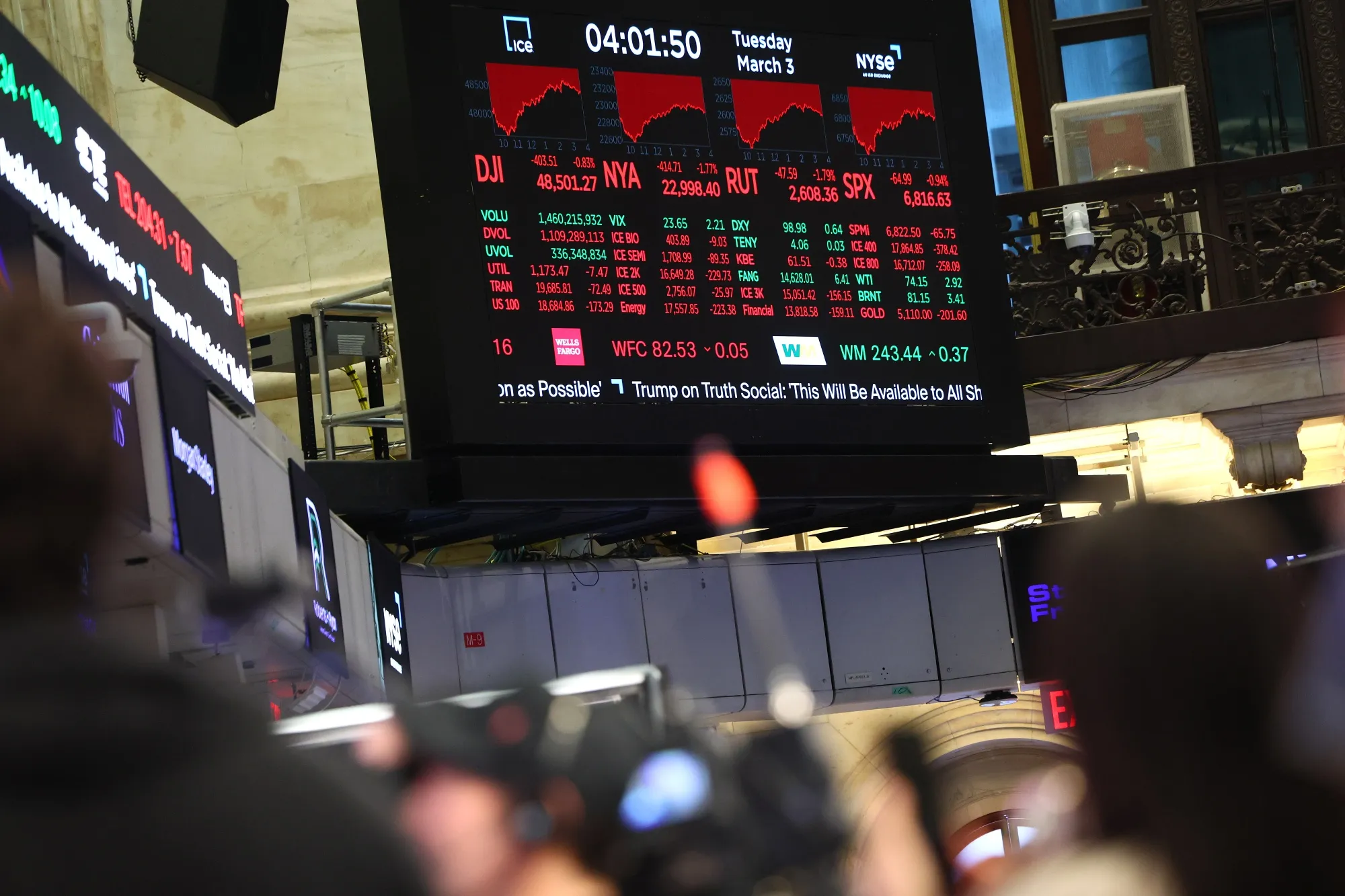
- The recent market volatility was largely attributed to forced selling by the overleveraged Situational Awareness hedge fund.
Leopold Aschenbrenner's hedge fund, Situational Awareness, experienced a meteoric rise and a dramatic fall, showcasing the perils of overleveraging in volatile markets.1
Aschenbrenner, a former OpenAI employee, reported a staggering 439% net return in July 2023, prompting a rush of investments.4
However, just six days later, Citadel acquired a significant portion of the fund's holdings in a transaction valued at approximately $16 billion, marking one of Wall Street's largest equity deals.6
The fund's strategy involved borrowing heavily to amplify positions while shorting perceived AI laggards, but this approach backfired when market conditions turned unfavorable.
As losses mounted, margin calls from banks compounded the fund's issues, leading to its collapse.
Aschenbrenner's downfall serves as a cautionary tale about the risks of concentrated investments, as he violated the cardinal rule of diversification.
Despite the fund's implosion, the market reacted positively to Citadel's intervention, indicating that investors viewed the situation as a result of user error rather than a systemic issue in the AI sector.7
The rally in AI-linked stocks, particularly chipmakers, following Citadel's acquisition underscores this sentiment, as investors remain optimistic about the long-term prospects of AI despite recent volatility.
“Before the blowup, Aschenbrenner's fund went from a few hundred million to $45 billion in under two years and was up 1,000% after fees at one point in 2026. Citadel bought a stake once estimated at $16 billion in one of Wall Street's largest rushed equity transactions, and chipmakers rallied in the following two days.”
 Seeking Alpha



