
- Lanthanide carriers combine optical and magnetic properties to enable high-resolution, multiplexed, deep tissue imaging across near-infrared (NIR), X-ray, and magnetic resonance imaging (MRI) modalities.
- Lanthanide probes in the NIR-II window enable multiplexing encoded by distinct emission lifetimes, with centimeter-scale penetration and sub-10 µm resolution, advancing tumor detection, cerebrovascular thermography, and thermal monitoring of inflammation.
- Biosynthetic lanthanide-binding proteins provide high-relaxivity, targeted MRI, and favorable safety profiles, improving diagnostic performance.
- Lanthanide carriers could help define the next generation of biomedical imaging and fast-track the emerging field of theranostics—approaches that link diagnostic imaging with treatment selection, delivery, or monitoring.
- Senior author Prof Xiaogang Liu at the National University of Singapore stated that lanthanide carriers are expanding possibilities in biomedical imaging by delivering high-resolution, highly sensitive contrast across a wide range of imaging techniques.
- Lanthanide carriers are engineered chemical, nano-, or biomolecular systems that bind, incorporate, or stabilize lanthanide ions such as europium, terbium, and gadolinium.
- Research teams are increasingly developing lanthanide carriers as dual-function agents that combine imaging with targeted drug delivery, generating new opportunities for theranostic applications, including cancer and treatment.
- Dr. Yuxia Lui, First Author, National University of Singapore, mentioned that lanthanide carriers have already demonstrated truly compelling advantages across multiplexing, sensitivity, and functional imaging.
Lanthanide carriers are engineered systems that bind lanthanide ions like europium and gadolinium, enhancing biomedical imaging capabilities. They enable high-resolution, multiplexed imaging across NIR, X-ray, and MRI modalities, facilitating applications in tumor detection and disease monitoring.1246
These carriers support long-term single particle tracking and subcellular thermometry, revealing nanoscale biophysical dynamics in living systems. Their use in the NIR-II window allows for centimeter-scale penetration and sub-10 µm resolution, crucial for advanced medical diagnostics.
According to Prof Xiaogang Liu from the National University of Singapore, "Lanthanide carriers are expanding possibilities in biomedical imaging by delivering high-resolution, highly sensitive contrast across a wide range of imaging techniques, from MRI and X-ray to optical imaging."5
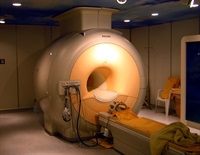
The potential of these carriers extends to theranostics, linking diagnostic imaging with treatment selection and monitoring. Dr Jorge Méndez-Ramos from the University of La Laguna noted that lanthanides could lead to untapped applications in various technological fields, including healthcare.
Despite many advances remaining in the proof-of-concept stage, researchers emphasize that lanthanide carriers are positioned to bridge materials science, biophysics, and clinical needs, reshaping biomedical imaging toward more precise and personalized diagnostics.
“Research teams are developing lanthanide carriers as dual-function agents for imaging and targeted drug delivery, creating new theranostic opportunities in cancer treatment. Prof Xiaogang Liu noted that these carriers deliver high-resolution contrast across various imaging techniques, potentially reshaping precision diagnostics in healthcare.”
 frontiersin.org
 News-Medical



