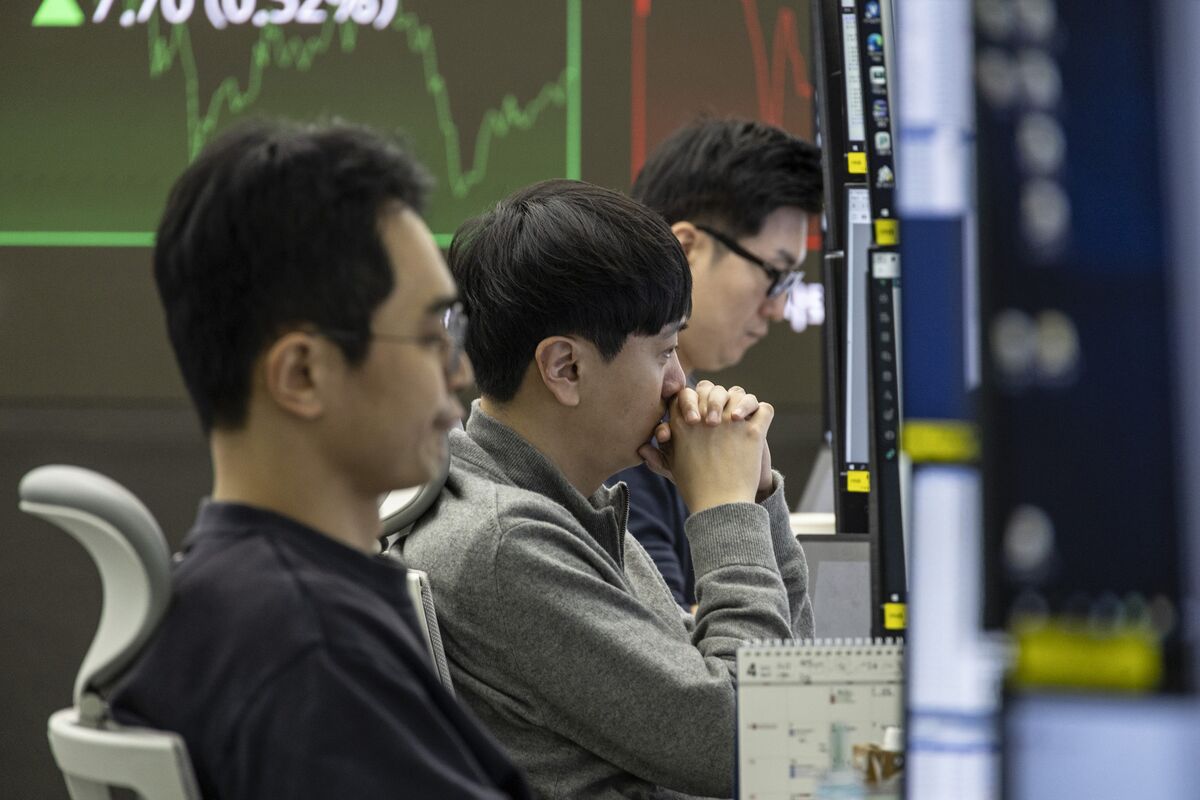
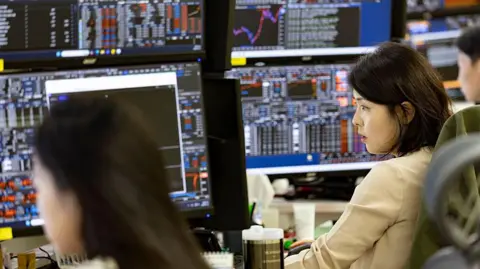
South Korean stocks faced a steep decline as the Kospi Index fell over
9% at market open, inciting a
20-minute trading halt to stabilize the situation. The fall is attributed to a retreat from
artificial intelligence stocks and fresh turmoil in the Middle East, specifically between
Iran and Israel.
The Kospi appears particularly vulnerable as it was the
world’s best-performing market in the past year, leading to concerns that the recent bull run was fueled by overzealous bets on
AI technologies. Analyst
Marc Velan commented, "The move looks more like a positioning and momentum unwind than a reassessment of the long-term AI story." Predominantly, significant shares within the tech sector, notably
Samsung and
SK Hynix, experienced substantial declines. Amid this backdrop,
oil prices surged due to geopolitical tensions, raising inflation concerns.
The overall market has witnessed volatility recently, with Japan’s
Nikkei 225 index falling around
4%, indicating widespread declines across Asia. As the stock markets react to these factors, some analysts caution that the market regime may be shifting from stability to instability, raising the specter of higher Treasury yields and tightening liquidity.
The recent developments underscore the precarious balance investors must navigate in turbulent market conditions fueled by both
technology market shifts and
geopolitical tensions.
Sources: 

South Korean stocks fell sharply, endangering the global bull run as investors shifted away from artificial intelligence investments amid renewed tensions in the Middle East. The Kospi Index dropped more than 8%, leading to a trading halt as volatility swept through Asian markets and oil prices surged.