- India's engineering research and development (ER&D) sector is projected to surpass USD 100 billion in revenue by 2030, driven by the integration of Artificial Intelligence (AI) into core engineering workflows, according to Nasscom.
- The sector is estimated to generate USD 63 billion in revenue in FY26, indicating a significant shift towards software-defined, data-driven, and intelligent engineering.
- Nasscom's report titled 'Physical AI – Redefining ER&D opportunity for India' outlines that demand will evolve in three waves.
- Global ER&D spending is projected to reach USD 2.48-2.50 trillion by 2030, growing at a CAGR of 8-9% between CY24 and CY30, creating new areas of demand.
- The first wave of demand will focus on scaling intelligent products, connected equipment, and predictive maintenance.
- The second wave will involve a surge in simulation, virtual engineering, and intelligent manufacturing as companies transition from experimentation to production.
- In the long term, autonomous systems are expected to emerge as the largest opportunity as barriers related to safety and reliability are addressed.
- Nasscom emphasizes that India is well-positioned to become a critical engineering layer for the global market, leveraging its strengths in AI, embedded systems, and data engineering.
India's engineering research and development (ER&D) sector is projected to exceed $100 billion in revenue by 2030, driven by the integration of Artificial Intelligence (AI) into core workflows, according to a report by Nasscom.14
The sector is expected to generate $63 billion in revenue in FY26, reflecting a significant shift towards software-defined, data-driven, and intelligent engineering practices. Global ER&D spending is anticipated to reach $2.48-2.50 trillion by 2030, growing at a CAGR of 8-9% from CY24 to CY30.2
Nasscom's report, titled 'Physical AI – Redefining ER&D opportunity for India', outlines three evolving waves of demand. The first wave focuses on scaling intelligent products, connected equipment, and predictive maintenance. The second wave will see advancements in simulation, virtual engineering, and intelligent manufacturing as companies transition from experimentation to production.56
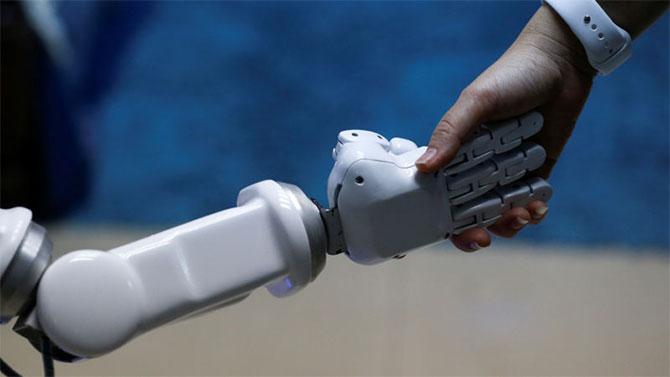
Looking ahead, Nasscom predicts that autonomous systems will emerge as the largest opportunity as challenges related to safety, reliability, and deployment are addressed. This shift is expected to unlock new revenue streams beyond traditional services, including AI-as-a-Service (AIaaS) and Robotics-as-a-Service (RaaS).7
Nasscom emphasized that India is well-positioned to become a critical engineering layer for the global market, leveraging its strengths in AI, embedded systems, automotive and industrial ER&D, simulation, and data engineering.8
“Nasscom's report 'Physical AI – Redefining ER&D opportunity for India' outlines three waves, starting with intelligent products and predictive maintenance, then simulation and intelligent manufacturing, and finally autonomous systems as the largest opportunity. The shift also unlocks new revenue streams like AI-as-a-Service and Robotics-as-a-Service.”