- Figma's stock fell to a 52-week low of $16.60 in April due to concerns that AI's ability to generate images quickly would impact its business.
- Figma reported Q1 revenue of $333.4 million, reflecting a remarkable 46% year-over-year growth.
- Figma forecasts Q2 revenue to be between $348 million and $350 million, indicating continued growth.
- IBM missed its Q2 revenue expectations, leading to shares hitting a 52-week low of $199.19 on July 23.
- Figma generates revenue through subscriptions for its collaborative design software, which has seen consistent growth.
- IBM's sales have been volatile, particularly in its hardware and consulting services, which have faced challenges.
- IBM's zSystems line saw a 42% year-over-year decline in sales in Q2, contributing to its revenue struggles.
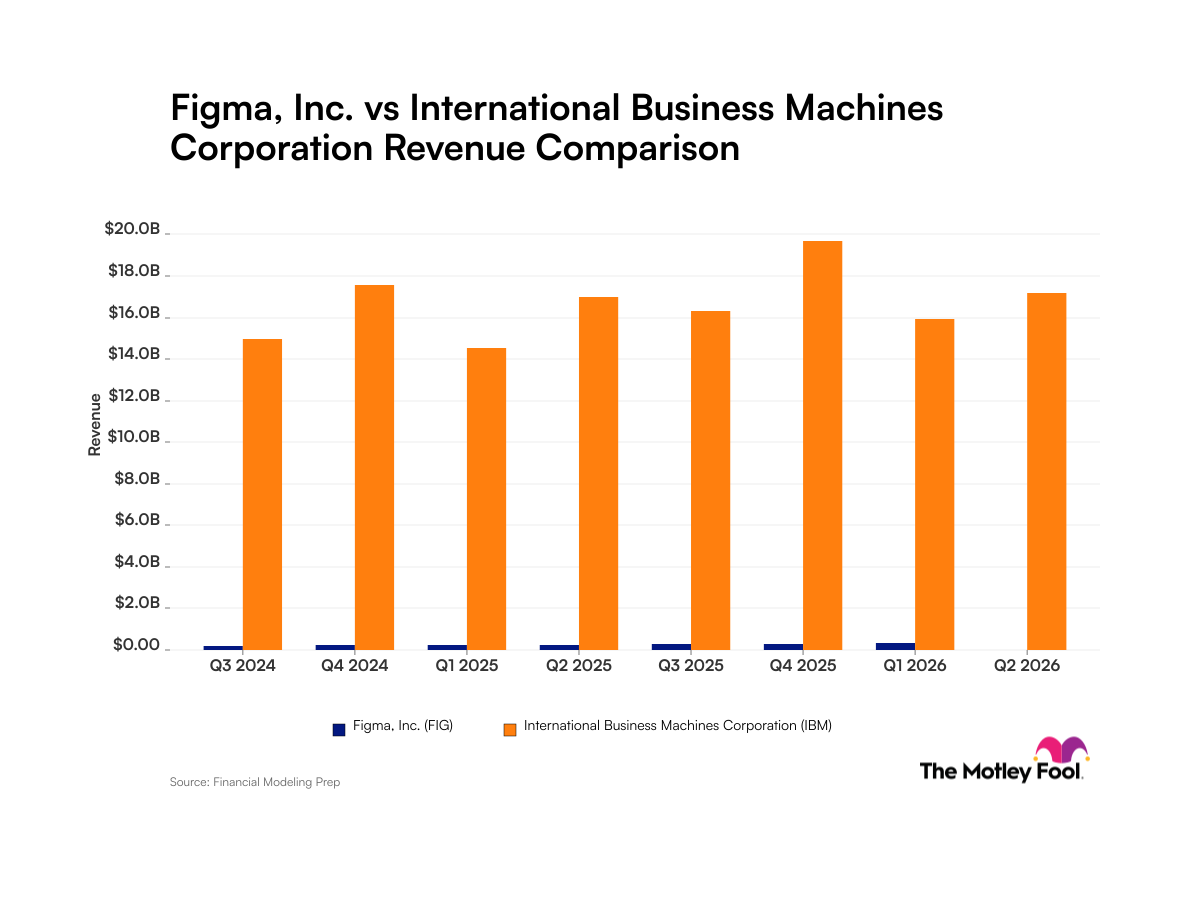
- Figma's success contrasts with IBM's challenges, highlighting the differences in their business models.
Figma's consistent revenue growth stands in stark contrast to IBM's volatile sales, highlighting the divergent paths of a young design company and a veteran tech giant. Figma's Q1 sales reached $333.4 million, marking a remarkable 46% year-over-year growth, with forecasts suggesting continued momentum into Q2, estimating revenues between $348 million to $350 million.
In contrast, IBM's sales have been erratic, particularly in its hardware and consulting services sectors. The company recently faced a 15% EBIT margin shortfall and saw its shares plummet to a 52-week low of $199.19 on July 23 after failing to meet Wall Street's revenue expectations amid the ongoing AI boom. This volatility is compounded by a 42% year-over-year decline in sales of its zSystems line of computer mainframes, which had initially performed well.6
Despite IBM's long-standing presence in the market, Figma's sales trajectory suggests a thriving business model, as it continues to innovate with new features like timeline-based animation tools introduced at its annual conference in June 2026. Investors are increasingly recognizing Figma's resilience, especially as concerns about AI's impact on its business have proven unfounded, with Figma's sales trend remaining robust.
As the tech landscape evolves, Figma's growth story may serve as a beacon for investors looking for stability in a market characterized by uncertainty, particularly in the face of IBM's challenges.
“Figma's Q1 revenue reached $333.4 million, an amazing 46% year-over-year increase, with a Q2 forecast between $348 million and $350 million. IBM, meanwhile, missed Wall Street's Q2 revenue expectations amid the AI boom, sending its shares to a 52-week low of $199.19 on July 23.”
 The Globe and Mail
 Yahoo Finance



