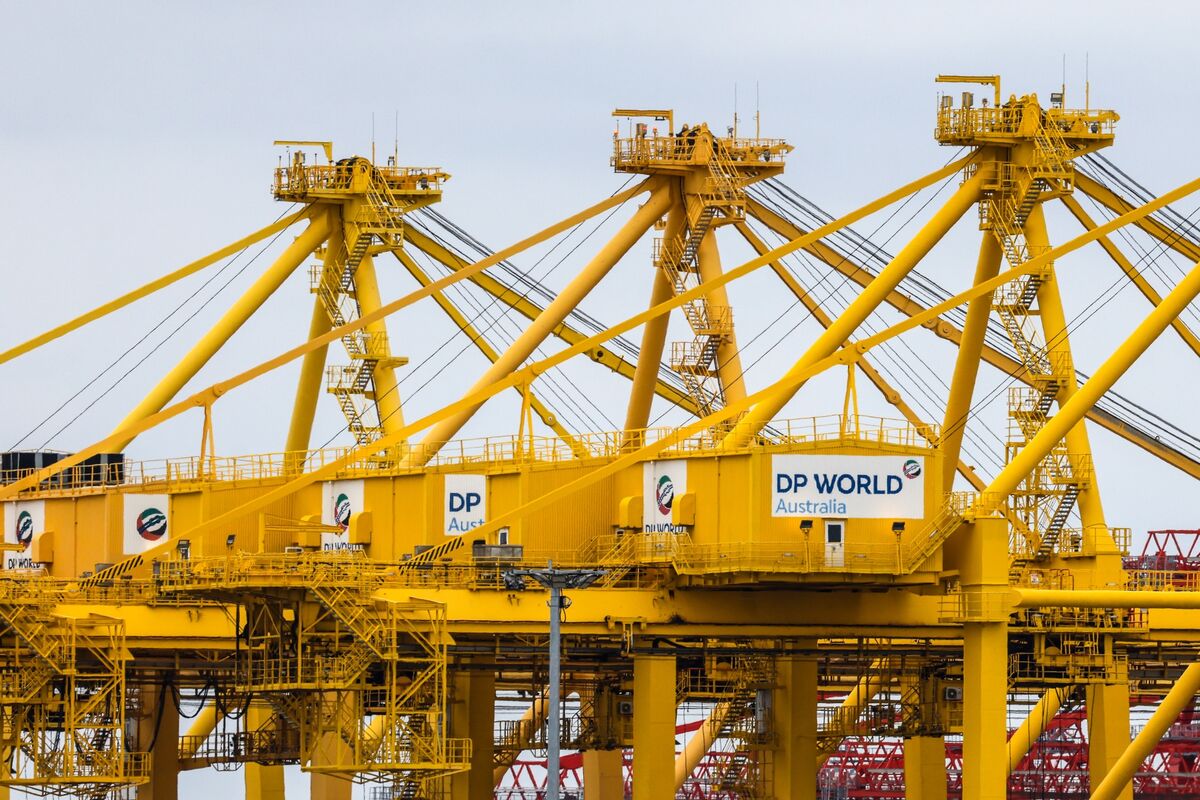
- Australian dock workers are demanding a 28-hour work week with no loss of pay as the use of artificial intelligence (AI) and automation expands across the country's ports.
- DP World, the port logistics giant, has proposed the use of AI-assisted remote-control cranes and driverless vehicles as part of its automation program.
- The Maritime Union of Australia stated that the new technology should be used to improve workers' lives, not threaten their jobs.
- The AI push is being led by DP World, which the Maritime Union of Australia (MUA) claims has put workers' jobs "in the crosshairs."
- DP World dock workers are believed to currently work around 32 to 35 hours a week, depending on their location.
- A study commissioned by the MUA indicates that the automation program threatens up to 1,000 jobs or more than 60% of the dock and maintenance workforce.
Australian dock workers are advocating for a 28-hour work week with no loss of pay as the Maritime Union of Australia raises alarms over the increasing use of artificial intelligence (AI) and automation by DP World, a major port logistics company.1234
The union argues that the push for AI threatens to displace up to 1,000 jobs, or more than 60% of the dock and maintenance workforce, as the company implements AI tools to manage operations without adequate consultation.6
"If DP World wants AI and automation, then they must pay the social dividend. The new technology doesn't have to cost our members their jobs or put their livelihoods at risk just so a terminal operator can boost profits," the union stated.
Currently, dock workers are believed to work around 32 to 35 hours a week, depending on their location, and the union insists that technology should enhance workers' lives rather than threaten them.
The call for a 28-hour work week reflects a broader demand for job security in the face of advancing technology, as the union emphasizes that the benefits of AI should not come at the expense of workers' livelihoods.
“The Maritime Union of Australia warns that DP World's AI push could threaten over 60% of the dock and maintenance workforce, potentially impacting up to a thousand jobs. The union emphasizes that new technology should enhance workers' lives rather than jeopardize their livelihoods, calling for fair compensation in the transition.”
 BBC
BBC



