- Oxford Martin School researchers told MPs that the UK cannot rely on continued access to the world's most advanced artificial intelligence systems, highlighting the importance of AI sovereignty in political discussions.
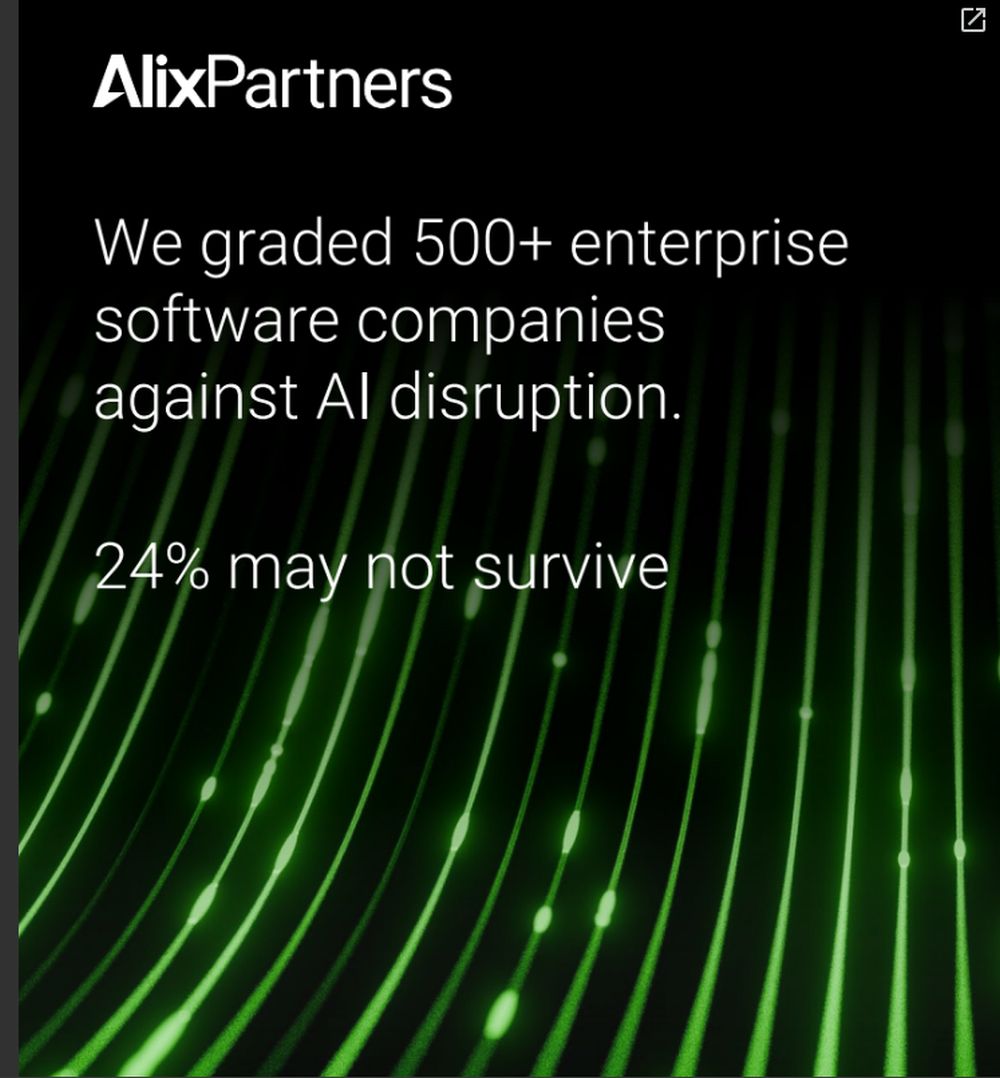
- AlixPartners' analysis of over 500 software companies indicates that 24% may face significant disruption risk due to weak data and vertical moats.
- The analysis shows that only 14% of the companies have strong data and vertical moats, marking them as highly protected against AI disruption.
- AI is making stored, retrievable knowledge cheap, which threatens traditional professional identities and roles.
- Experts warn that as AI continues to learn, careers based on human learning may become obsolete.
A recent analysis by AlixPartners indicates that 24% of over 500 software companies are at significant risk of disruption due to weak data and vertical moats, which are essential for maintaining competitive advantages.
The study highlights that only 14% of these companies possess strong protective measures, leaving a substantial portion vulnerable to the rapid advancements in AI technology.

In parallel, Oxford Martin School researchers have raised alarms regarding the UK's reliance on foreign AI systems, emphasizing that the nation must secure its own AI infrastructure to ensure economic and national security.12
The UK currently controls only 0.1% of the world's AI computing capacity, despite hosting 4%. This disparity poses a significant risk as global access to AI resources can shift rapidly.
The researchers advocate for two key policy responses: establishing sovereign control over critical AI infrastructure and collaborating with other technologically advanced nations, such as Canada and Japan, to develop next-generation AI capabilities.
As AI continues to evolve, the implications for both individual careers and national economies are profound, with the potential to render traditional knowledge-based roles obsolete.
The urgency of these findings underscores the need for immediate action to protect both corporate and national interests in the face of AI disruption.
“AlixPartners' analysis indicates that 24% of over 500 software companies have weak data and vertical moats, making them highly exposed to AI disruption. Meanwhile, the Oxford Martin School emphasizes the need for the UK to establish sovereign control over its AI computing infrastructure to safeguard national interests.”
 Psychology Today
 oxfordmartin.ox.ac.uk



